Blog
Dental hygiene tips for healthy teeth & gums
Dental Crown vs Filling: What’s the Difference?
A friend rang me from her dentist’s parking lot last year with a crown recommendation she hadn’t seen coming. She’d gone in expecting a filling and left with a four-figure treatment plan. Her question was whether the dentist was upselling her.
The dental crown vs filling call doesn’t get explained well most of the time, and patients are left to take the recommendation on faith.
What Does a Filling Actually Do
A cavity is just a hole. A filling closes it. The decayed part comes out, the space gets packed with composite resin or amalgam, and the tooth carries on as normal.
How much healthy tooth is left is what separates a dental crown vs filling situation. Cleveland Clinic notes that fillings suit small to moderate cavities where the walls around the damaged area are still solid enough to grip the material. The filling doesn’t hold the tooth together. The tooth holds the filling.
Catching decay early usually means a filling and nothing else. Small damage, and the tooth stays mostly your own.
What Is a Dental Crown vs Filling in Terms of What It Actually Does
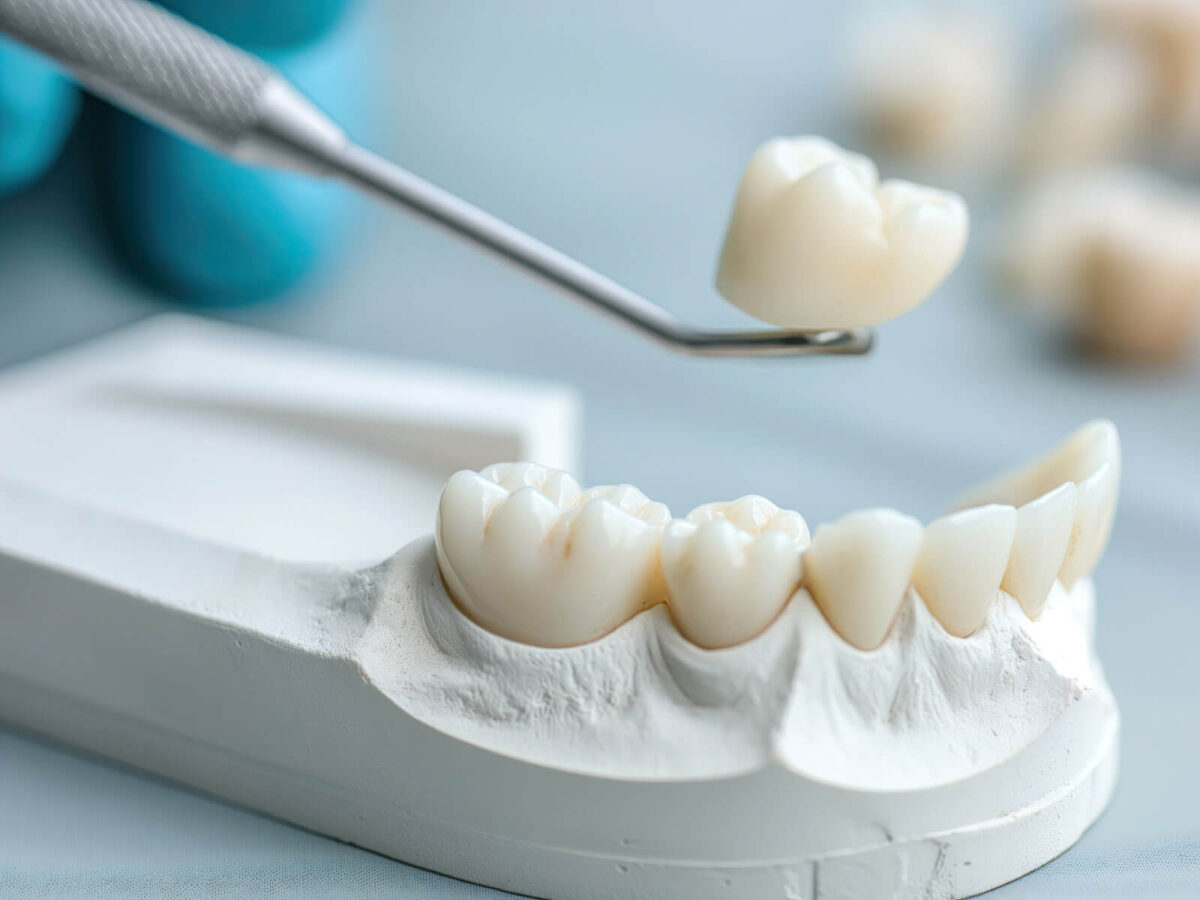
A crown doesn’t patch the damaged part of a tooth. It replaces the entire outer surface above the gum line. The tooth gets shaved down on all sides so the crown has something to sit over. A scan or impression goes to a lab, and a temporary covers the tooth in the meantime. The permanent crown comes back in a week or two and gets cemented over what’s left of the original tooth.
Mayo Clinic puts it in terms of load-bearing: when a tooth can no longer handle biting force on its own, a filling won’t cut it. The dental filling vs crown difference comes down to that. A filling needs the surrounding tooth to hold it. No structure left means nothing to anchor it to.
When Is Crown Chosen Over a Filling
Both treat a damaged tooth, which is why the dental crown vs filling decision confuses people. The difference isn’t visible from the outside. What drives it is how much healthy tooth structure is left underneath.
A dentist pushing a crown isn’t always upselling. Waiting on a second opinion while a cracked tooth keeps taking pressure can push a situation from crown territory into extraction territory faster than most people expect. The tooth doesn’t stop deteriorating while you decide.
A filling becomes the wrong call when drilling out the decay would leave the remaining walls too thin to handle chewing. Thin walls crack under pressure. Cleveland Clinic notes that once damage compromises more than about half the tooth’s structure, a crown is what holds things together.
When Does a Filling Stop Being an Option for Dental Filling vs Crown Situations
The dental filling vs crown question shifts once you look at what’s actually happening below the surface.
Large or recurrent decay
A cavity that’s eaten through a significant portion of the tooth leaves too little structure for a filling to grip. The same goes for a tooth that’s been filled multiple times. At some point, there’s more filling material than actual tooth, and reliability becomes a real question.
A cracked tooth
Fillings don’t hold cracked walls together. A crown wraps around the outside, which is the only way to stop a crack from spreading further with each bite. Someone I know had a hairline crack that her dentist flagged at a routine exam. She decided to wait. Six months later, the tooth split at dinner. What would have been a crown turned into an extraction and an implant consultation.
After a root canal on a back tooth
The nerve gets removed during a root canal, and without it, the tooth dries out and becomes brittle. Back molars are already taking the most punishment of any tooth in the mouth. Mayo Clinic recommends crowning back teeth after root canal treatment because going without one is how teeth that could have been saved end up lost.
A broken cusp
When part of the biting surface breaks off, a filling can patch it short-term. How long it holds depends on where the break sits and how much tooth is left. For anything substantial, a crown is the more reliable call.
How Much More Does a Crown Cost Compared to a Filling
A filling runs $150 – $300, and most insurance covers the bulk of it. Crowns are a different story. Cleveland Clinic puts the cost at $800 to $1,500 or more, with most plans covering around half as major restorative work. That out-of-pocket gap is what makes people hesitate when the dental crown vs filling recommendation doesn’t go the way they hoped.
Declining a crown to save money and getting a filling instead is a gamble. If the filling fails in a year or two because the tooth actually needed the crown, the patient ends up paying for both, on a tooth that’s had more time to deteriorate.
How Long Do Crowns and Fillings Actually Hold Up
Composite fillings last around 7 – 10 years before they need replacing. Amalgam runs longer, sometimes past 15, though it’s not used much anymore. What people don’t always consider is that each replacement removes a bit more of the original tooth.
Crowns last longer, though by how much depends on the material. Cleveland Clinic puts the typical range at 5 to 15 years. Porcelain is what most people get. Zirconia and gold outlast it, but most dentists don’t lead with those options.
Can a Crown Go Over an Existing Filling
It can, and it’s not an unusual situation. A tooth that was filled years ago and has since cracked or deteriorated further is a common path to a crown in the dental crown vs filling conversation. The old filling material doesn’t need to come out. The crown goes over everything.
What matters is whether enough healthy tooth structure remains to support it. I’ve seen cases where the decay underneath an old filling had spread further than the X-ray initially showed. Too little remaining structure means the crown has nothing reliable to grip. A buildup or post may need to go in before anything else.
FAQ
Can I ask for a filling instead of a crown to save money?
Sometimes. But the dentist will tell you whether it’s actually viable for that specific tooth. A filling put into a tooth that needed a crown tends not to last, and the tooth usually ends up in worse shape by the time the crown happens anyway.
Does a Crown Kill the Tooth?
Not necessarily. A crown can go on a living tooth with an intact nerve. That only changes after a root canal.
How painful is a crown compared to a filling?
Neither hurts during the procedure — both are done under local anesthesia. Some sensitivity after is normal and usually fades within a few days.
My filling keeps falling out. Do I need a crown?
Probably worth asking your dentist about it. A filling that won’t stay usually means there isn’t enough tooth structure left to hold it, and a crown may be the more permanent fix.
Conclusion
The dental crown vs filling question feels arbitrary until you see what’s actually driving it. A filling works when there’s enough tooth left to support it. When there isn’t, a filling placed anyway is usually a short-term fix on a tooth that needs more.
A four-figure quote for a procedure you weren’t expecting is jarring. Before saying yes, ask to see the X-ray. I’ve seen that one conversation change a patient’s entire read on the situation.
Ready to find out what your tooth actually needs? Book a consultation and ask to have the X-ray reviewed with you before anything gets decided.