Blog
Dental hygiene tips for healthy teeth & gums
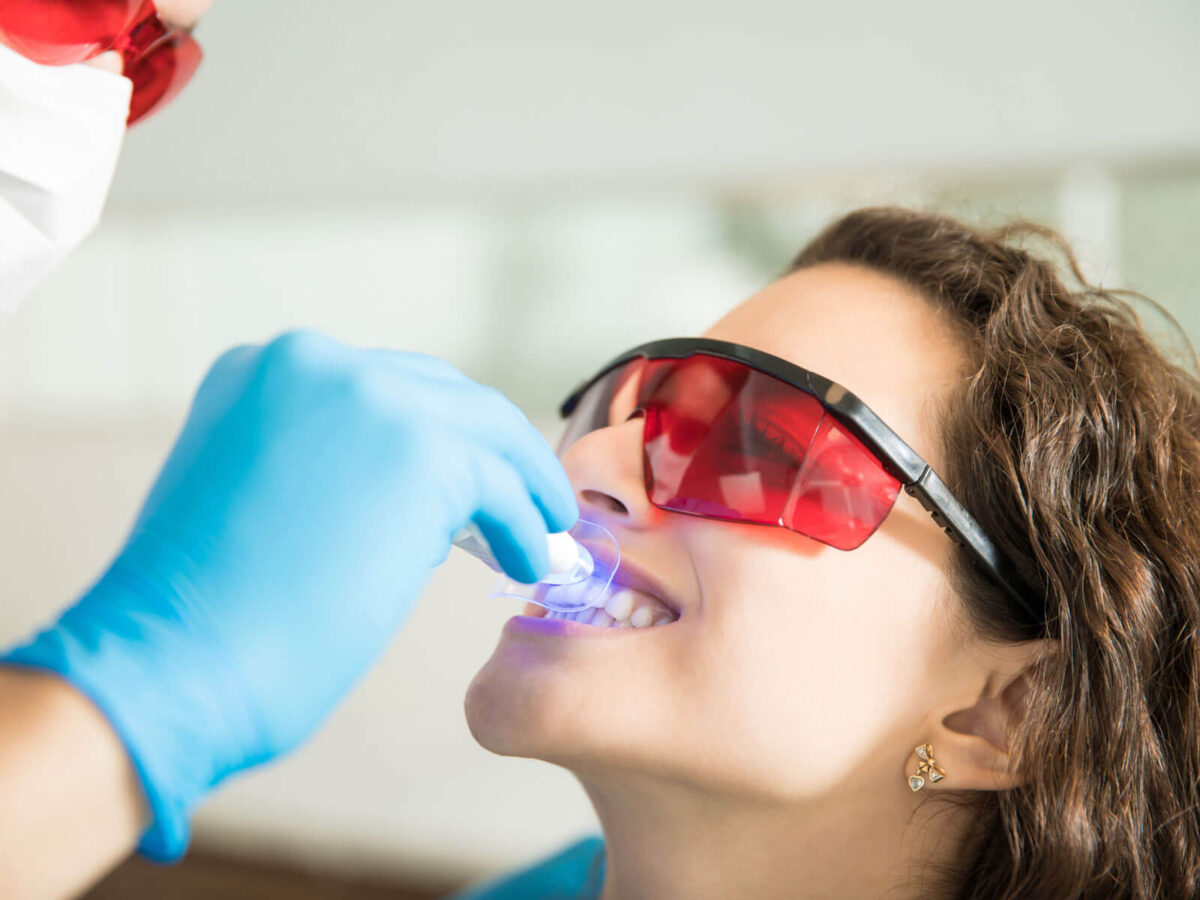
What Is Laser Teeth Cleaning? Benefits & What to Expect
A patient asked me last month if laser cleaning would replace her regular six-month visit. She’d seen an ad promising a painless laser cleaning at a strip mall office and figured her usual appointment was about to get an upgrade.
Let me clear up “what is laser teeth cleaning” before the marketing does more damage than good. It’s a treatment for gum disease, which is a different problem entirely from the plaque and tartar most people build up between checkups.
I’ve used laser-assisted treatment on a fair number of patients over the years, always for periodontal problems. It has never once stood in for the cleaning they’d have gotten anyway.
TL;DR
- Laser teeth cleaning treats gum disease. The name suggests otherwise, which is where most of the confusion starts.
- The laser reaches bacteria and infected tissue inside gum pockets. Your dentist scales the teeth as well during the same appointment.
- Bleeding is minimal, and healing takes days rather than the weeks gum surgery demands.
- Budget $1,000 – $3,000 per quadrant against roughly $150 for a standard cleaning.
- Your six-month visits carry on regardless.
What Is Laser Teeth Cleaning, Exactly
Buy a package advertised as laser cleaning, and what you’re getting is laser-assisted periodontal therapy. That’s a treatment for infected gum tissue. The buildup your hygienist scrapes off twice a year sits well outside its remit.
Standard cleanings still run on hand instruments and ultrasonic scalers whether or not a laser exists in the building. Cleveland Clinic describes that appointment as clearing plaque and tartar from the tooth surfaces, occasionally with sealants or fluoride added on.
Laser teeth cleaning enters the picture once there’s infection or deep pocketing to deal with. A billboard on the highway will tell you otherwise.
How Does a Dental Laser Treat Your Gums
Two types show up in most practices: Er and diode. Both work by concentrating light energy onto the bacteria and diseased tissue sitting in your gum pockets. Bacterial colonies get disrupted and infected gum tissue clears away, all of it without a scalpel involved.
An American Dental Association panel reviewed 72 studies on nonsurgical gum treatment and found that scaling alone improved clinical attachment by around 0.5mm, with adjuncts like lasers adding somewhere between 0.2mm and 0.6mm on top. Useful gains, though a long way from what the advertising implies.
Some systems reach subgingival calculus as well, the tartar sitting below the gumline where hand tools struggle. For my money, that’s where laser teeth cleaning earns its place in a treatment plan.
What Are the Real Laser Teeth Cleaning Benefits
The laser teeth cleaning benefits worth talking about all relate to gum disease treatment. Reduced bleeding during the appointment sits near the top because the laser seals small blood vessels as it works.
Recovery is what patients bring up afterward. Skip the incision and skip the stitches, and you’re through the healing in days, whereas gum surgery would have taken weeks.
Then there’s the accuracy of the thing. A laser targets infected tissue while leaving healthy gum largely alone, and a scalpel can’t offer that level of control as easily.
How Does Laser vs Traditional Cleaning Compare
Laser vs traditional cleaning is a false choice, because dentists tend to use both in the same appointment rather than picking a side. Scaling and root planing does the mechanical work, physically removing plaque and tartar from the tooth and root surfaces.
Adding a laser improves bacterial reduction in deeper pockets, though the ADA panel’s numbers show the size of that gain varies considerably by case and by which laser is being used.
Healthy gums need nothing more than the traditional approach, and no research has changed that. The laser becomes worth considering once pockets are deep enough that scaling on its own leaves infection behind.
Wondering If Laser Treatment Fits Your Gum Health?
Get a proper evaluation before assuming which option you need.
What Does Laser Dental Cleaning Cost
Laser dental cleaning cost runs well past a standard cleaning. Practices charge from around $1,000 for a single quadrant, and a severe case in a major city can take that figure to $3,000.
Set that against the $150 you’d hand over for a regular check-up and clean. Patients rarely see that gap coming, particularly the ones who walked in assuming laser cleaning was a fancier version of what they already get.
Insurance coverage swings a lot too. Some plans apply standard periodontal surgery benefits toward it. Others treat it as elective, with limited or no coverage at all.
What Happens in the Chair During Treatment
Local anesthesia comes first. The laser works inside gum tissue that would otherwise be far too tender to touch. Once you’re numb, most people describe the sensation as pressure with some vibration behind it.
The work moves back and forth between two tools. Your dentist runs the laser into the pockets to clear diseased tissue, then goes back in with the scaler for whatever debris is left. Each quadrant takes 45 minutes to an hour.
Recovery is mild by surgical standards. You’ll be sore for a day or two, so keep meals soft until it passes. Most dentists want to see you again a few weeks on to check the tissue is healing as it should.
Who Is a Good Candidate for Laser Cleaning
Moderate to severe periodontal disease with deep pockets is where laser treatment justifies its price. Ordinary plaque buildup gains nothing from it, and paying for it in that situation is money wasted.
Patients anxious about traditional gum surgery often lean toward it as well. The shorter recovery and reduced bleeding make it an easier prospect to face.
Advanced bone loss is a different matter. Those cases, along with several other complex presentations, still do better under traditional surgery. Only a proper periodontal evaluation will tell you which side of that line you fall on.
Curious Whether Your Gums Need More Than a Routine Cleaning?
Find out with a proper periodontal evaluation.
FAQ
Do I still need my six-month cleaning?
Yes. Laser treatment handles gum disease. Routine maintenance is a separate job and carries on as normal.
Is laser gum treatment painful?
Less so than gum surgery, going by what patients tell me afterward. There’s no incision and far less bleeding, which accounts for most of that difference.
How long does recovery take?
A day or two of mild soreness for most people, which is a fraction of what surgical recovery demands.
Will insurance cover laser periodontal treatment?
Partially, in a lot of cases. Call your provider and check the specifics before you book anything.
Conclusion
Understanding “what is laser teeth cleaning” comes down to separating the marketing from the medicine. As a tool against gum disease, it does solid work, provided you go in knowing that’s the job it’s designed for.
Bleeding gums or a periodontal diagnosis already sitting in your notes are the situations where this conversation makes sense. Ask your dentist whether laser-assisted treatment suits your case before an advertisement decides it for you.
Think You Might Need More Than a Standard Cleaning?
Get evaluated and find the right treatment for your gums.